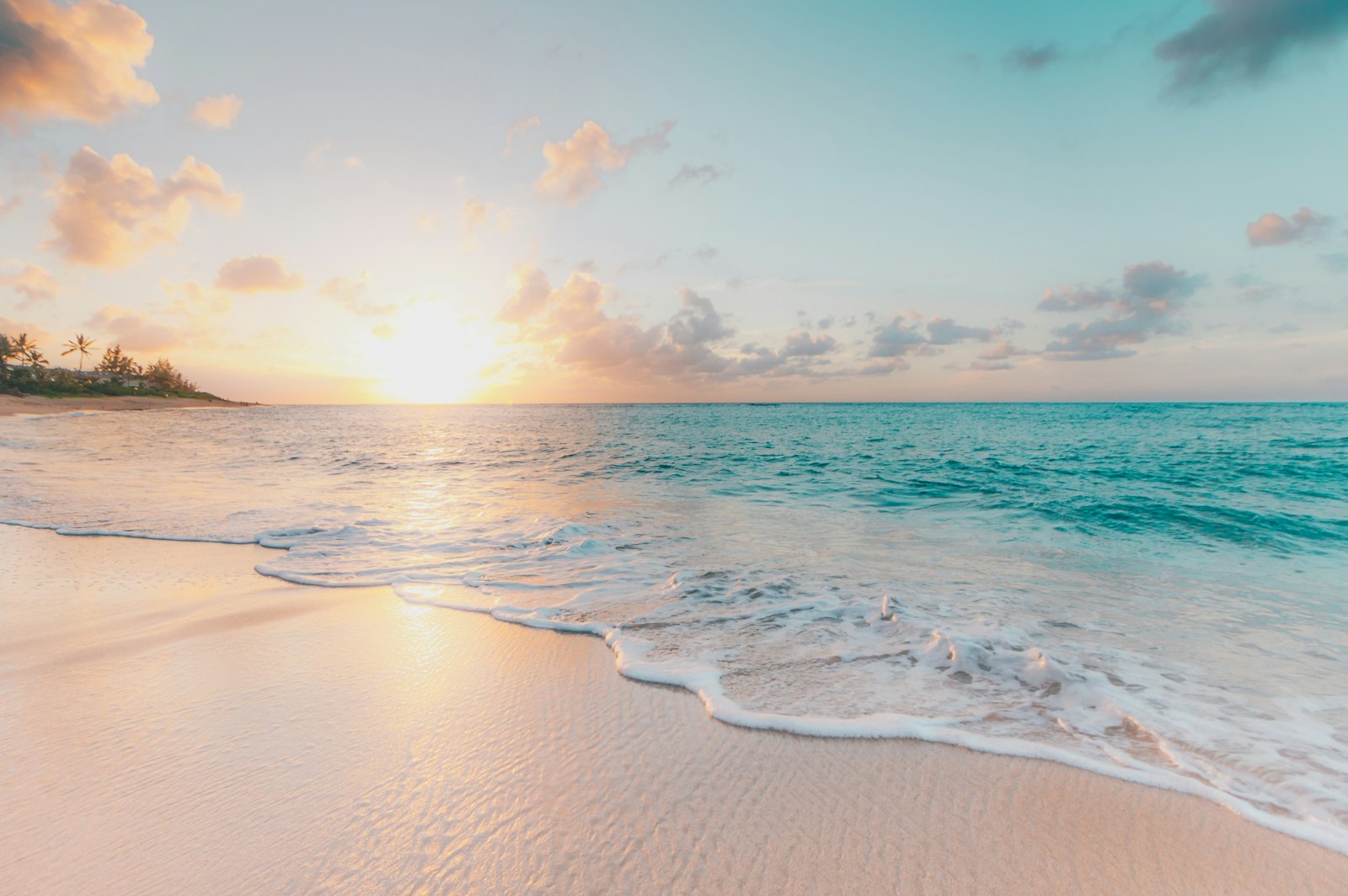
After Olympia’s stone, the Ionian coast offers a different pedagogy: horizontal blue, salt air, swimming as recovery from history.
Day-trippers sometimes treat sea and sanctuary as separate checkboxes. The better itinerary lets them converse — morning among columns, afternoon in water that cools the mind. The peninsula itself suggests the sequence: inland ritual, then the open edge.
Light that edits color
Ionian light is a ruthless editor. It bleaches excess, sharpens edges, and makes the sea look enamelled by mid-morning. By evening the same water softens into metal and rose. Photographers know the shift; swimmers feel it as temperature and mood.
This journal refuses resort language. The coast is a public commons of light, not a catalogue of rooms. When coastal hotels appear in regional writing — including well-known shoreline strips west of Olympia — they are geography, not invitation.
The shore keeps rewriting the footnote in turquoise while the ruins hold the main text inland.
Recovery without a script
You do not need a program to recover from a day of history. You need immersion and time. Float until the stadium leaves your muscles. Walk the wet sand until your thoughts match the tide’s shorter sentences.
That is the Ionian’s gift to Olympia visitors: a second chapter written in water. Thalasso & Myth keeps both chapters open, because culture without recovery becomes exhaustion, and recovery without culture becomes amnesia.